
Stylish & Colorful Crochet Rastafarian Cover Up Skirt Pattern
Gorgeous and vibrant, the free crochet Rastafarian cover-up skirt pattern is perfect for adding a touch of boho flair to your wardrobe this season.
It is a delightful addition to any crochet enthusiast’s collection. This vibrant and colorful pattern, inspired by Rastafarian culture, brings a unique bohemian flair to your wardrobe. Perfect for beach outings, music festivals, or casual summer days, it offers both style and comfort, allowing you to express your creativity and individuality.
Crochet Rastafarian Cover Up Skirt

The easy-to-follow instructions make it suitable for all skill levels, from beginners to seasoned crocheters. One of its main benefits is its versatility; it can be worn over swimwear or paired with leggings for a trendy layered look. Additionally, the pattern is an excellent project for using up leftover yarn, making it both economical and environmentally friendly.
Tip:
For a perfect fit, customize the skirt’s length and waistband according to your measurements, ensuring a personalized piece that suits your style and body shape beautifully.
Material:
- Red yarn
- Gold (yellow) yarn
- Green yarn
- Black yarn
- Crochet hook
- Scissors
- Yarn needle
- Measuring tape
- Beads (optional)
Starting Chain:
- Make a slip knot to start your crochet project.
- Create a foundation chain in multiples of four. For a size small to medium, chain 124. (For a larger size, consider chaining 132 or adjust according to your desired measurements).
- After completing your desired number of chains, add one more chain.
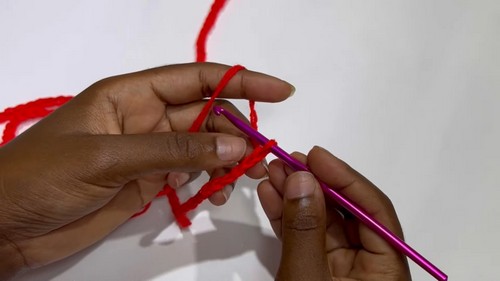
Row 1:
- Skip three chains and in the fourth chain, make a double crochet (Note: the skipped chains count as your first double crochet).
- In the next chain, place another double crochet.
- Chain one, skip one chain, and in the next, make a double crochet.
- Continue this pattern (three double crochets, chain one, skip one) till the end of the row.
- Join to form a circle but ensure your work is not twisted. Slip stitch on top of the initial chain three to join.

Row 2 (Similar to Row 1):
- Chain three (counts as your first double crochet). Continue the pattern from Row 1, placing three double crochets, chain one, skip one.
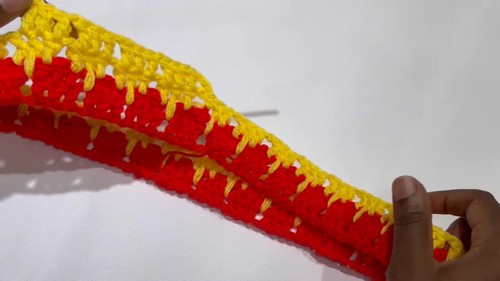
Color Changing and Adding Texture:
- After completing two rows, change yarn color (example: to yellow).
- Start the row by chaining three, then skip next two stitches and double crochet in the third stitch.
- Incorporate an outstanding double crochet stitch by picking it from the previous chain one spaces, combining both.
- Continue the pattern of double crochet, chain one, skip one stitch till the end of the row.
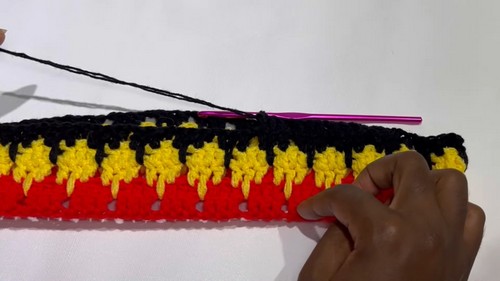
Row 4 (Spike Row):
- Begin with chain four (this counts as a double crochet and chain one).
- Place three double crochets on top of the previous row’s double crochets, chain one, and repeat till the end.
- Repeat the pattern from rows 3 and 4 for the desired skirt length, changing colors every two rows.
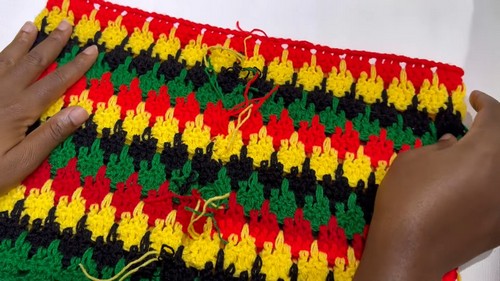
Finishing Touches:
- Once you reach your desired length (e.g., nine rows or 18 if counting each color change as a row), fasten off your work.
- Weave in all loose ends.
- Determine the placement for the lace-up feature and make a long strand by chaining (e.g., chain 60 in red, 100 in black, and another 60 in red for a decorative waist tie).
- Weave the strand through the work for the lace-up detail, adjusting based on whether you want it in the center or off to the side.
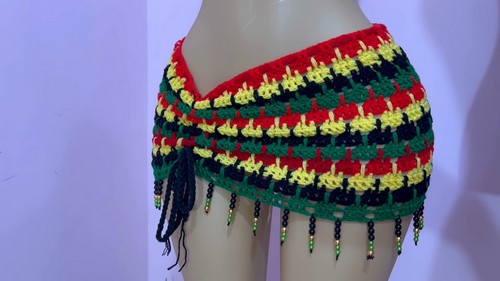
Optional Bead Attachment:
- Thread beads onto a yarn using a needle. You can choose any pattern of colors or bead sizes.
- Securely tie the beads at the bottom of the skirt for added decoration.

Final Note:
- This pattern creates a vibrant, Rastafarian-themed mini skirt with a customizable fit and length, perfect for personal wear or a thoughtful handmade gift.
- The video provides visual guidance for each step, ensuring even beginners can follow along and achieve a beautiful result.


